There is no single figure we can give you for a patio in Dublin, and anyone who quotes you one before seeing your garden is guessing. What actually determines your final number is the material you choose, how much groundwork your garden needs, and how easy it is to get machinery and materials to where the work is happening. Two gardens of the same size on the same road can come out very different prices once you factor in ground conditions and access.
Why patio prices vary so much across Dublin gardens
We’ve been installing patios across Dublin for over 26 years, from small courtyard gardens in Rathmines terraces to larger rear gardens in Dundrum and Rathfarnham, and the one thing that never changes is how much the site itself affects the price. A lot of Dublin’s older housing stock, particularly in Drumcondra, Glasnevin and Dublin city, has narrow side access or none at all. That means materials sometimes have to be carried through the house or lifted over a wall, which adds labour time that a wide driveway site in Swords or Stillorgan simply doesn’t need.
Ground conditions matter just as much. A lot of Dublin soil is heavy clay, which holds water and moves slightly with the seasons. If the base isn’t excavated and compacted properly for that ground, you’ll see cracking or sinking within a year or two, no matter how good the surface material looks on day one. That excavation and sub-base work is often the biggest hidden cost in the whole job, and it’s also the part homeowners most often try to shortcut when comparing quotes.
What actually pushes the cost up or down
Before you start comparing quotes, it helps to know what you’re actually paying for. The surface material is only one part of it.
- Ground condition and excavation: heavy clay, a high water table, or an existing concrete patio that needs breaking out all add time and cost.
- Size and shape: a simple rectangle is quicker to lay than a patio with curves, steps, or multiple levels.
- Access: can a dumper or mini digger get into the back garden, or does everything have to be barrowed or carried by hand through a side passage?
- Drainage: patios need a proper fall away from the house and, on clay soil, often need additional drainage to stop pooling.
- Material choice: porcelain, natural stone, granite and block paving all have different supply costs and different laying techniques.
- Edging and extras: retaining walls on sloped sites, steps, lighting, or a border in a contrasting material all add to the final figure.
- Removal of the old patio or decking: breaking out and skipping old material is real, billable work, not an afterthought.
How the main materials compare
We get asked constantly which material is “the cheapest” or “the best value”, and the honest answer is that it depends on what you want it to do. Here’s how we’d generally rank them for a typical Dublin garden, in our experience.
Indian sandstone is usually the most budget friendly natural stone option and remains one of the most popular choices we lay across Dublin. It has a warm, slightly textured finish that suits both older and newer houses, though it does need sealing and occasional cleaning to keep its colour, and it can be prone to the odd flaky layer if a lower grade stone is used. We cover the full detail on our Indian sandstone patios page.
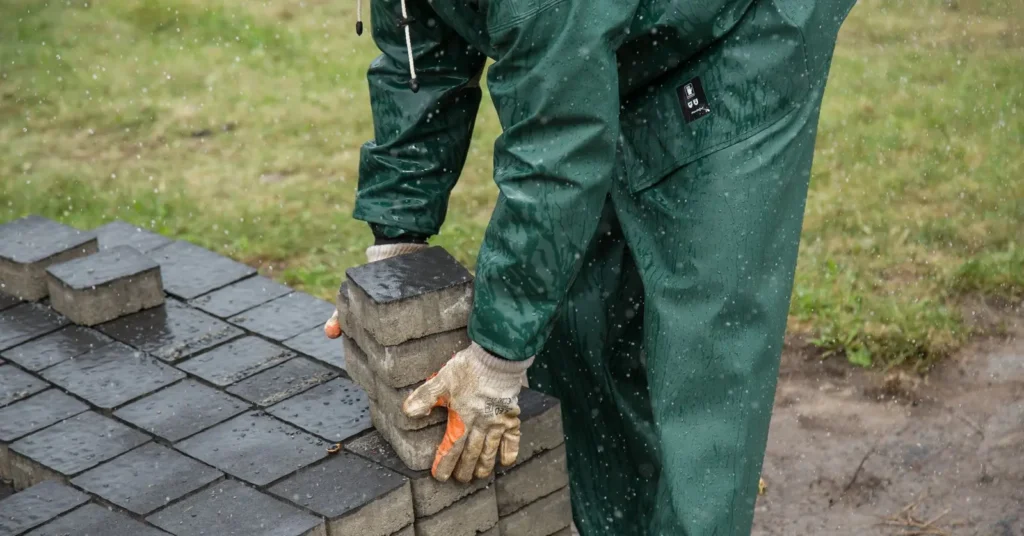
Block paving sits at a similar end of the scale to sandstone for most jobs, sometimes a little less depending on the pattern and finish chosen. It’s hard wearing, handles Dublin’s freeze thaw cycles well, and individual blocks can be lifted and replaced if one gets damaged, which you can’t do with a slab. See our block paving patios page for the options.
Porcelain costs more than sandstone or block paving, largely because the material itself is more expensive and it needs a more precise, well prepared base to perform properly. In return you get a surface that doesn’t need sealing, barely stains, and keeps its colour for decades. For a lot of Dublin homeowners who want a low maintenance, contemporary look, it’s worth the extra outlay. Our porcelain patios page goes into the finishes available.
Granite is generally at the higher end of what we lay. It’s extremely dense, resists scratching and weathering better than softer stones, and tends to suit more formal or period properties around Dun Laoghaire and Blackrock particularly well. Full detail is on our granite patios page.
Beyond these, we also work with a range of other natural stone patios, where cost depends heavily on the specific stone, its source, and the finish you want.
The hidden costs people forget to ask about
Most of the complaints we hear about other jobs going over budget come down to things that were never factored into the original quote. Skip hire and spoil removal for an excavation can add a surprising amount on a Dublin site, especially if there’s no truck access and material has to be carried out in bags. Sloped gardens, common enough in Dundrum, Rathfarnham and parts of Stillorgan, often need a retaining wall or steps, which is structural work, not decorative. And if your existing patio or decking is on a poor base, removing it properly (rather than just laying the new surface over it) is extra work that pays for itself in how long the new patio lasts.
We’d always rather tell a homeowner upfront that their job needs a retaining wall or extra drainage than have them find out halfway through. A quote that looks lower because it skipped that detail isn’t actually cheaper, it just moves the cost to a phone call six months later.
How to get a real number for your garden
The only way to get an honest figure is to have someone look at your actual garden, the access, the ground, and what you want the finish to look like. That’s what we do through our patio installation service, and it costs nothing to ask. If you want to see the fuller picture of how we approach a job from start to finish, our patio installation Dublin page covers the process, and our about us page has more on our background. When you’re ready, get in touch through our contact page and we’ll arrange a time to come out and measure up.
Frequently Asked Questions
Is porcelain always more expensive than Indian sandstone?
In most cases yes, porcelain costs more per square metre than Indian sandstone because the material and the base preparation are both more demanding. The trade-off is that porcelain needs very little ongoing maintenance, where sandstone needs periodic sealing and cleaning to look its best.
Why do two quotes for the same size patio come back so different?
Usually it comes down to what’s included. One quote might cover full excavation, a proper sub-base, drainage and spoil removal, while another assumes the ground is already suitable and skips some of that. Ask each contractor exactly what groundwork is included before comparing figures directly.
Does Dublin’s clay soil really make a difference to patio cost?
It can, yes. Heavy clay holds water and shifts slightly through the year, so it often needs deeper excavation, a thicker sub-base, and sometimes extra drainage compared with a well draining site. Skipping this on clay ground is one of the most common reasons we see patios crack or sink within a couple of years.
Is it cheaper to lay a patio over an existing concrete base?
Sometimes, but only if that base is sound, level and draining properly. If it’s cracked, uneven or has no fall, building on top of it just carries the same problems into your new patio. We’d always assess the existing base on site before recommending that route.
Do I need planning permission for a patio in Dublin?
Most standard garden patios don’t require planning permission, but rules can depend on the size, height changes, and whether your property is in a protected structure or conservation area. Check the current position with your local authority before work starts if you’re unsure.
How long does a typical Dublin patio installation take?
It depends heavily on size, access and ground conditions, but a straightforward garden patio commonly takes a matter of days once excavation starts, while larger or more complex jobs with walls, steps or drainage take longer. We’ll give you a realistic timeframe once we’ve seen the site.